
The Gilded Labyrinth
Secrets of the Subterranean Complex
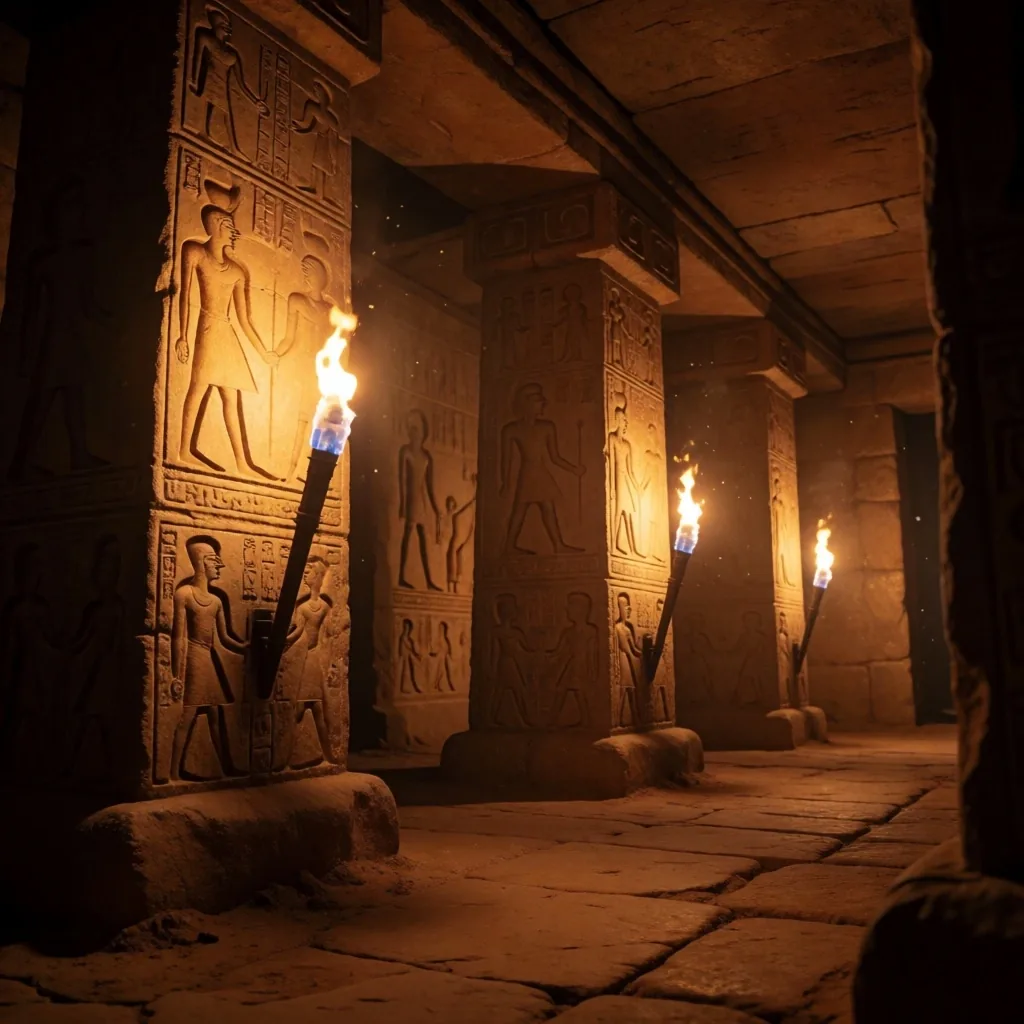
Tucked away in a remote corner of the desert, the Gilded Labyrinth is a vast underground network of halls, shrines, and storehouses that once served as the spiritual and administrative heart of a lost era. Our travel guides for Egypt treat the Labyrinth as a journey into the subconscious of the ancient world.
The Architecture of Complexity
Understanding the layout is the first step for anyone who wants to discover Egypt's hidden depths.
The Gilded Labyrinth was not built all at once; it evolved over centuries, with each new generation adding their own halls and corridors. The result is a structure that feels alive, a stone puzzle that challenges the modern sense of direction.
We discuss the engineering required to support such a massive underground space and the sophisticated ventilation systems that keep the air moving. Massive limestone blocks were quarried from the bedrock itself, fitted so precisely that a knife blade cannot slip between them. The corridors follow solar alignments — on certain days, a thin beam of light reaches deep into the complex, illuminating a single carved figure for mere minutes.
Our egyptian travel guides trace three distinct construction phases visible in the stonework: the earliest rough-cut passages, the classical period of polished shrine chambers, and the later administrative wings with their narrower, more practical corridors. Each phase tells you something about the people who carved it.
The Hall of a Thousand Pillars
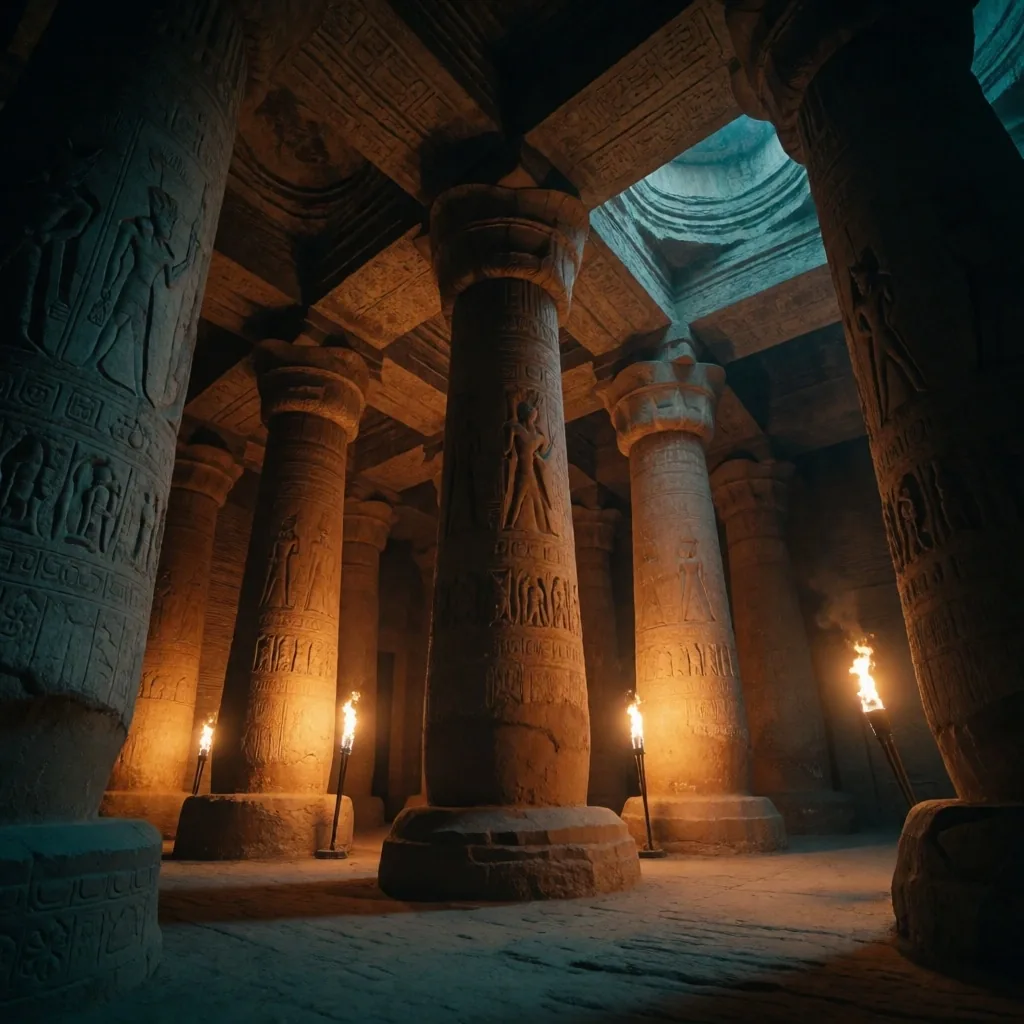
One of the most striking features of the Labyrinth is a central chamber filled with massive stone supports, each carved to resemble a different plant or deity. The scale of this room creates a forest of stone that plays with light and echo.
Our egyptian travel guides explain the symbolic meaning behind the pillar designs and how they reflect the ancient view of the cosmos. Papyrus-shaped pillars mark the northern approach, while lotus-bud columns line the southern gallery. Each botanical form corresponds to a region of the underworld as the builders understood it.
This is the heart of the Labyrinth, where the silence is most profound. Stand still and the acoustic deadening of the carved surfaces swallows even your own footsteps.
Deciphering the Wall Texts
Every inch of the Labyrinth's walls is covered in inscriptions. These are not merely decorative; they are the records of a civilization, containing everything from religious hymns to grain tallies.
We provide a primer on how to read the most common symbols, allowing you to engage with the text on a deeper level. The recurring cartouche frames mark royal decrees, while the smaller register lines below often record the quantities of offerings deposited in each chamber.
This travel blog aims to turn every visitor into a temporary scholar of the Gilded Labyrinth.
The Vault of Golden Artifacts
The "Gilded" part of the name comes from the sheer amount of precious metal found in the Labyrinth's innermost sanctums. These items were not intended for the eyes of the living but for the use of the deceased in the next world.
We describe the craftsmanship of the gold masks, jewelry, and ritual tools, highlighting the skill of the ancient smiths. Hammered so thin that light passes through the leaf, each mask was shaped to a specific individual — the nostril width, the brow angle, the jaw line all matched the person beneath.
These travel guides for Egypt remind us that to the builders, gold was the "flesh of the gods."
Navigating the Shadow Play
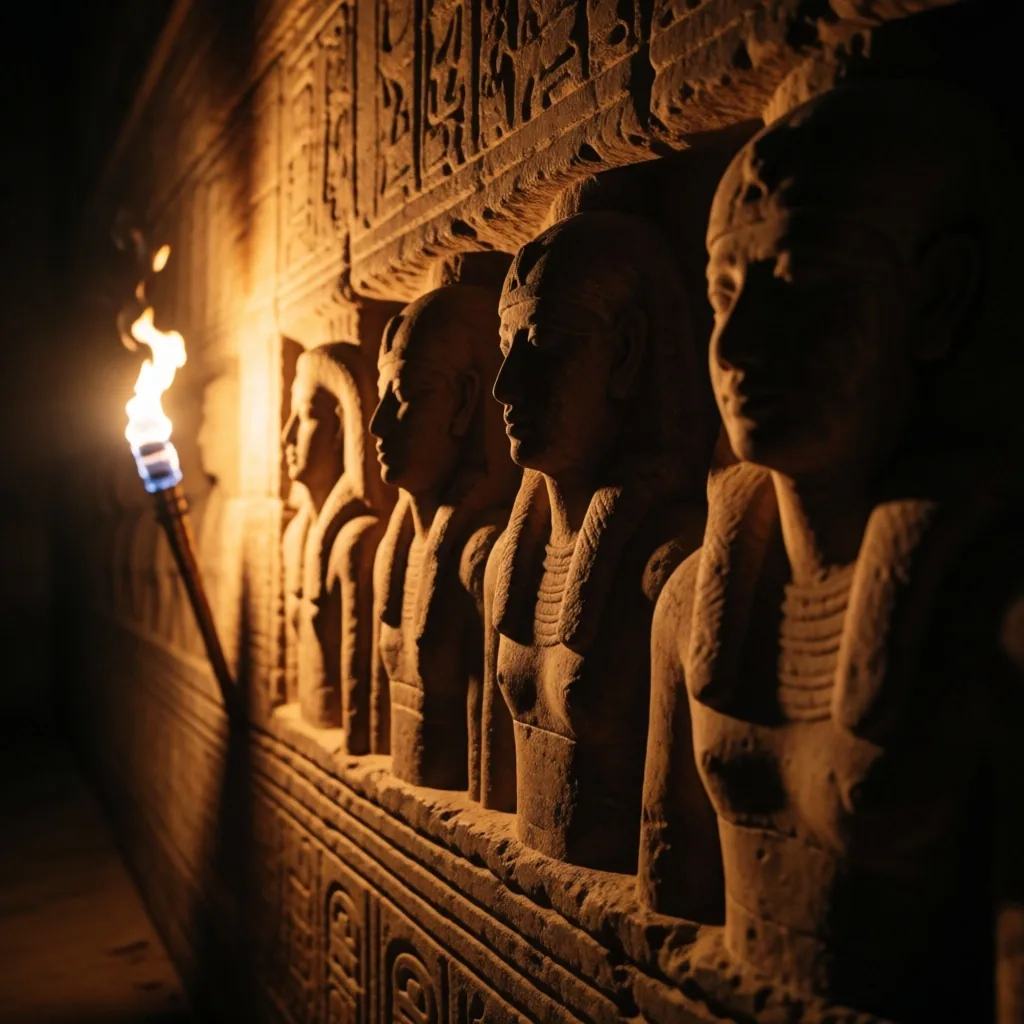
The Labyrinth was designed to be experienced by torchlight. The flickering flames would have made the carved figures on the walls appear to move and breathe.
We suggest bringing a high-quality flashlight to recreate this effect, focusing on the way the low-relief carvings change character depending on the angle of the light. Hold the beam low and to the left, and the figures seem to face right. Reverse the angle, and they turn toward you.
This travel into Egypt tip transforms a standard walk-through into a cinematic experience.
The Mystery of the Unfinished Chambers
Not all of the Gilded Labyrinth was completed. In some areas, the work simply stopped, leaving rough-hewn rock and half-sketched outlines. These sections are perhaps the most fascinating, as they reveal the process of the ancient artists.
We look at the tools they used and the red-ink grids they drew to ensure proper proportions. You can still see the snapped chalk lines on the ceiling and the mason's marks counting blocks removed. This travel blog provides a behind-the-scenes look at ancient construction.
The Sound of Silence: Acoustic Properties
The Labyrinth has unique acoustic properties, where a whisper in one corner can be heard clearly in another. This was likely intentional, used for ritual purposes or to allow guards to monitor the corridors.
We encourage travelers to experiment with these whispering galleries, experiencing the auditory side of ancient architecture. Our egyptian travel guides highlight these sensory details that are often missed by casual tourists.
Consistently cool below ground. The deep chambers hold a steady temperature regardless of the desert heat above.
Footsteps echo for several seconds in the main galleries. Whispering galleries carry voices across 40 meters of stone.
Polished limestone in the classical wings, rough-cut granite in the unfinished sections. The contrast is immediate under your fingertips.
Total darkness without a source. Even a small flashlight reveals carvings invisible to the naked eye at midday.
Spiritual Significance and Ritual Paths
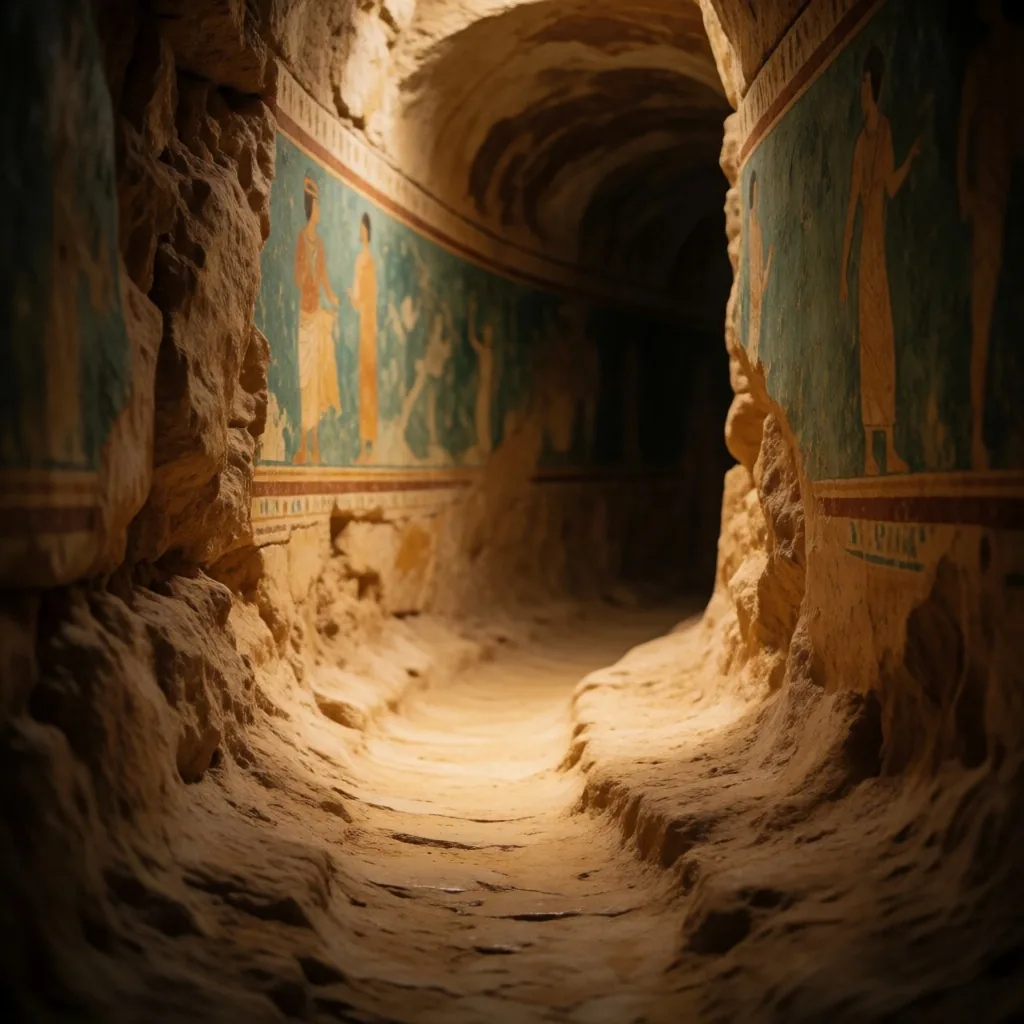
The Labyrinth was a place of initiation and transition. The path through the corridors was meant to mimic the journey of the soul through the underworld.
We map out the likely routes taken by ancient priests and pilgrims, providing a spiritual context for your exploration. The descending passages grow narrower as you move deeper, forcing a physical humility that mirrors the spiritual submission expected of the initiate.
To discover Egypt in this way is to participate in a tradition that spans millennia. The same corridors that once processed torch-bearing priests now carry travelers who walk slowly, listening to the silence.
Safety and Air Quality in the Depths
Exploring an underground complex requires practical precautions. While the Labyrinth is well-maintained, the air can be dry and dusty, and the floors are often uneven. This travel blog ensures that your journey through the Gilded Labyrinth is as safe as it is awe-inspiring.
Sturdy closed-toe shoes with grip soles. The stone floors are polished smooth by centuries of use and can be slick where moisture collects.
Carry more water than you think you need. The dry underground air pulls moisture from your body faster than the desert surface above.
Bring a high-quality flashlight with a narrow beam. A wide flood light flattens the reliefs; a focused beam brings them alive.
Stay with your group or guide. Side corridors branch without warning, and the layout disorients even experienced navigators.
Dust can be thick in the deeper, less-traveled wings. A simple cloth mask over the nose and mouth helps if you have sensitive lungs.
Allow more time than you expect. Moving slowly reveals carvings and acoustic details that a brisk walk completely misses.
Legacy of the Labyrinth in Modern Culture
The Gilded Labyrinth has inspired countless stories, films, and theories. We conclude our guide by looking at how this site continues to capture the global imagination.
By understanding the myth alongside the reality, you gain a fuller appreciation for why this site remains a pinnacle of travel into Egypt. The Labyrinth is not just a place you walk through; it is a place that walks through you.